Saturday, June 18, 2011

X-Men: First Class


Magneto vs. missiles

Scene: 1960s. Cold War.

As Erik Lehnsherr (Michael Fassbender) hunts down former Nazis, Charles Xavier (James McAvoy) studies at Oxford. Erik spent World War II in a concentration camp. Charles lived in luxury, but his parents were never around. His company was a girl about his age named Raven (Jennifer Lawrence). Former Nazi Sebastian Shaw (Kevin Bacon) plots to start World War III, so Erik, Charles, Raven, and a rag-tag group join together to stop him.

Oh, yeah, and they have superpowers. They’re mutated humans, and few know of their existence. Those who do know tend to fear and loathe them, making most mutants feel alone and discriminated against. METAPHOR.

If I had gone in expecting a James Bond film, I might have had a better idea of what to expect. This prequel to the other X-Men films had possibilities. We know from later films that Charles and Erik become leaders with opposing philosophies, even as they appear to share a genuine affection. How fun could it be to see their relationship develop?

The answer is pretty fun but also very stupid.

His mutant power is to fly upside down.

What they got wrong:

Dialogue
Some of the dialogue is cringe worthy and unbelievably cliché. How many times have we heard the phrase, “Who are you and what have you done with (etc.)” or “God help us all?” This may be paying homage to the past, but this knowledge doesn’t make the horrendous lines any easier on the ears.

Humans/Non-mutants/Muggles
Mutants are putting their lives on the line for lowly humans, but the big question here is, will the humans ever accept the mutants? Is it really worth saving a people who may very well turn against you? The film attempts to answer that question and show ambiguity by making almost every human character grating, irrationally stupid, and self-centered. Several minor characters (mostly humans) deliver their terrible lines in an especially wooden manner. This makes the stakes feel remarkably low. That’s quite an accomplishment considering the stakes are World War III.

History
Obviously, this is an alternate history. However, First Class is no Inglourious Basterds, a complex, satirical take on World War II. This film portrays two terrifying time periods in history, the Holocaust and the Cold War, with an offensive mixture of melodrama and lightheartedness. A figure resembling the sickening Nazi doctor Josef Mengele resembles a James Bond villain, gleefully shooting down an innocent Jewish woman. Was anyone else uncomfortable with this?

Race Relations (Spoiler Alert)
The film states its message about fifty times: be proud of your identity, no matter what your appearance. Yet the only African American man (Edi Gathegi, potentially interesting) in the film is one of only two mutants to be killed. The other is a Nazi.

Consistency
As is expected, there are several moments that make no sense. You might find yourself asking, how did that character know that other character’s name? Or, why aren’t they moving when they are in grave danger? Those questions are far less important than several puzzling allegiance shifts. Let’s just say a few characters who appear to be horrified when witnessing mass murder somehow become smug accomplices.

Professor X. (Note: if someone makes this gesture, he or she is reading your mind.)

What they got right:

Style
The design department had great fun with generic but iconic clothes and music of the 1960s. Prepare for turtlenecks and short skirts (and, because this is a comic book movie, cleavage).

Erik and Charles
The relationship between Erik and Charles is quite touching. Charles (dubbed Professor X) is a witty, confident, and believably inspiring leader. McAvoy is likable and surprisingly hilarious in the role. Charles uses his telepathic ability to help Erik (Magneto) control his unbalanced emotions. Erik uses his ability to mentally manipulate metal to pulverize his enemies. Erik is insightful, ruthless, and disturbed. Intense as always, Fassbender is engaging whether terrorizing bad-guys, fighting the darkness within, or giving acute advice to younger mutants.

Mutants
Raven (later named Mystique) has a fairly nice story as a blue shapeshifter embarrassed by her natural appearance. Nicholas Hoult does well as a scientist who is ashamed of his fancy feet, capturing both the character’s diffidence and gruffer side. Scenes involving mutant abilities are in some ways superior to the other X-Men films because characters use their powers to full effect (i.e. they do not unnecessarily backflip or punch others when they could shoot them with lasers). On the whole, the action is quite entertaining and certainly one of the best aspects of this film.

Villains
Kevin Bacon has fun as the nefarious Shaw, and his trio of suave baddies remains confident and calm in every situation. The serene Emma Frost (January Jones) is a telepath who wears mostly undies and can turn her skin into a protective veneer of diamonds. The other two henchmen have a very small amount of screen time. One has at most five lines. The other has none. Still, Riptide (Alex Gonzalez) has an amusing ability to keep his hair and outfit perfectly in place while creating tornadoes, and Azazel (Jason Flemyng) bears a demonic appearance, possesses stunning assassination skills, and can teleport in a burst of flames. (Can anyone blame him for joining the villains? Who would trust a guy who looks like the devil?)

Story
There is an actual arc, including a climax featuring several satisfying action sequences and some emotional resolution. There’s even a little tragedy and surprise.

A satisfying bromance. Professor X tries to help his troubled friend.

Conclusion

X-Men: First Class should be enjoyable for anyone who has followed the X-Men series. It’s an entertaining film which improves as it progresses. Unfortunately, it is not also a good film.

Staring at a demonstration of mutant power the professor's mansion

Friday, June 17, 2011

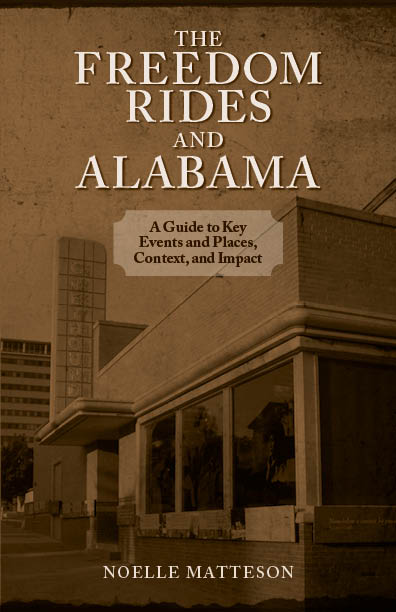
Check out my new book: The Freedom Rides and Alabama


The Freedom Rides and Alabama: 
A Guide to Key Events and Places, Context, and Impact


Recently, I had the opportunity to learn more about the Freedom Rides and participate in celebrations of their 50th anniversary. Because I work for a publishing company, I was able to write a small book summarizing the rides and their effect on Montgomery, Alabama.


This book gives a brief overview of the 1961 Freedom Rides, a crucial moment in American history in which an interracial group traveled across the South to protest segregated transportation. 

The Freedom Rides and Alabama focuses on the Freedom Riders’ experiences in Alabama, from the firebombing of their bus in Anniston to surviving beatings in Birmingham. A large portion of this book describes the riders’ arrival in Montgomery, including the violent white mob that greeted them and the ensuing mass meeting at First Baptist Church, where leaders such as Martin Luther King Jr. and Fred Shuttlesworth spoke. 

This volume puts the Freedom Rides in historical context and is published in conjunction with the Alabama Historical Commission to celebrate the opening of a Montgomery museum at the site of the Greyhound station where the Freedom Riders arrived on their journey south, dedicated to the history of the Freedom Rides on the occasion of their fiftieth anniversary.


For more information, visit the NewSouth Books website:


http://www.newsouthbooks.com/bkpgs/detailtitle.php?isbn_solid=1603061061

Tuesday, May 24, 2011

Of Gods and Men


Inspired by John Kiser’s nonfiction book The Monks of Tibhirine, Of Gods and Men is a moving depiction of French monks living in Algeria in the tense 1990s. This film features the darker parts of human existence, including fear and despair, and yet is more about goodness than evil.


Locals invite the monks to tea and celebrations. One monk, the amiable Luc (Michael Lonsdale), is a doctor who sees a constant stream of patients and occasionally passes out clothes as well as diagnoses. The brothers take turns gardening, sometimes pausing to appreciate the scenery. The film’s soundtrack consists solely of what the monks hear, which is mostly beautiful liturgical music.


Their peaceful life is threatened by terrorism and the legacies of French colonialism (mentioned only briefly). They debate whether they should leave and save their lives or continue to help the villagers and possibly die. This question is more difficult for some than others. One of the youngest, the middle-aged Christophe (Olivier Rabourdin), struggles with his faith. Even Christian (Lambert Wilson), the handsome and headstrong leader, has troubles, reaching out to nature in times of contemplation.


The characters have a deep love for one another, and both religious and nonreligious audiences can identify with the monks’ search for answers and fulfillment. Characters are subtly drawn and acted. The lovely countryside is shot in natural light, reflecting the monks’ inner turmoil or joy. Their simple lives are evoked in snatches rather than drawn out scenes, making the movie’s pacing slow but not tedious.


Of Gods and Men is emotional but not dramatic. Its message of forgiveness comes across as neither naïve nor patronizing, and its statements about tolerance in relation to Christianity, Islam, and religion in general are particularly timely. This uniquely lovely film is unsentimental but tender, gentle but powerful, and refreshing in every sense of the word.

French with English subtitles

Tuesday, March 29, 2011

The King's Speech


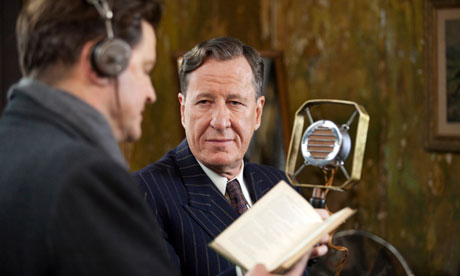
The King's Speech is neither the most complex nor the most original film of the year, but this beautiful film stands out in that it requires the audience to have an attention span. The movie follows Prince Albert (Colin Firth), nicknamed Bertie, in Pre-World War II England as he attempts to overcome, or at least cope with, his stammer. His wife Her Royal Highness Elizabeth (Helena Bonham Carter) recruits Australian speech therapist Lionel Logue (Geoffrey Rush) and so begins Bertie's unconventional path to Kinghood and self-acceptance.

Visuals are sometimes self-conscious and even cartoonish, but coloring is used to excellent effect. Lionel encourages Bertie to break away from social constraints, and his space is appropriately off-kilter, while the foreboding, increasingly dark shots of Bertie's surroundings have the effect of a vice. A stunning Colin Firth successfully conveys Bertie's vulnerability, which is made all the more harrowing because of his lack of self-pity. Geoffrey Rush complements Firth's performance and brings his delightful dialog to life as the alternately cheeky and tender Lionel.

Bertie's history of pain and stress is expressed in his body. The mechanical advice of physicians of the day falls flat, as does the advice to merely "relax." Lionel offers a deeper connection, one which will likely inspire numerous viewers who have struggled with feelings of inadequacy and isolation. The film highlights the strict social structure as a source of damaging pressure. Bertie's life has almost no relationship to his struggling subjects, and yet the descriptions of his upbringing are horrifying. Lionel has a content family but, as an Australian, faces frequent prejudice. In spite of its heaviness, the film is quite funny as well. Bertie's dry sense of humor and Lionel's insouciance light up many a scene and amplify the more serious moments.


The two most interesting minor characters are Bertie's father King George V (Michael Gambon) and brother David (Guy Pearce), later King Edward VII, both of whom play a major role in Bertie's pathology. Gambon's George is a man with little patience for weakness, and Pearce's David is a silly, unfortunate product of his family.

Helena Bonham Carter does well with a less fleshed-out part. Lionel's wife (played by Jennifer Ehle) may be too perfect, but Lionel's and Bertie's families are portrayed with a light, lovely touch. Winston Churchill (Timothy Spall) is a purely positive and somewhat simplistic figure, and Archbishop Cosmo Lang (Derek Jacobi) is almost pure oiliness. Still, most characters are believable and very much of their time. Even the most progressive characters do not seem to be artificially implanted with modern ideas.

The horrors of World War I quietly hang over the characters, making the impending World War II all the more forboding. This might have been a more powerful film had it focused more on the threat ahead. Whatever the case, the painfully beautiful climax evokes a sense of both tragedy and victory and manages to be simultaneously heartrending and uplifting.

The King's Speech is less a political study than a poignant depiction of the power in treating another like a human being, even a king.

Tuesday, February 22, 2011

I Saw the Devil


Ji-woon Kim directs the aptly titled vengeance tale I Saw the Devil. The two main characters learn about the devil in themselves by looking at one another.

Kyung-Chul (Min-sik Choi) murders women. Resilient and wily, he is also so insane that he is almost hapless in his understanding of the world. One winter's night, he butchers Joo-Yeon (San-Ha Oh), a young woman who is pregnant by her fiance Kim Soo-hyeon (Byung-hun Lee). Joo-Yeon's detective father feels guilty for not being able to protect his own daughter, but he tries to be thankful for at least finding her dismembered body. He and his other daughter find space in their grief to worry about Soo-hyeon.


A skilled special agent, Soo-hyeon takes it upon himself to find the killer. We follow both Soo-hyeon and Kyung-Chul as the former brutalizes suspects and the latter prowls for more victims. When Soo-hyeon finds Kyung-Chul, he abuses him to near death before pulling back and leaving him money. With the help of an implanted tracking device and microphone, Soo-hyeon later finds Kyung-Chul so he can repeat the torture.

Kyung-Chul mentions his strange stalker to an equally mad friend, who points out that his pursuer is enjoying the hunt in the same way they do. Kyung-Chul contemplates this and begins to enjoy his and Soo-hyeon's symbiotic relationship. Soo-hyeon's sister-in-law tells him that there is no meaning in taking revenge on a crazy man. Soo-hyeon claims there is, and the audience wonders when he will deem the punishment complete.


Touches of ironic humor are sprinkled throughout the film. The deranged killer calls others "crazy retards" or "psychos." One scene shows his reluctance to get into a taxi after he has lured so many women into his vehicle.

For those who don't love gore, this film is nauseatingly violent. The protagonist's brutality is shown more graphically than the criminals'. Due to excessive blood-letting and lingering shots on defenseless women, the message that retribution calls forth an unwelcome monster is difficult to take seriously. However, the film's final minutes are chilling. The grisly action pauses long enough for us to witness what is within the two men. I Saw the Devil's harrowing conclusion powerfully examines the pointlessness of sadism.

Monday, January 17, 2011

Downton Abbey: Season One


"Don't you care about Downton?"
"What do you think? I've given my life to Downton."

The opening image of a beautifully lit telegraph cuts to that of a train barreling towards the audience. Its whistle interrupts the Morse code, signaling music that complements the engine's chugs. A man stares out the window at sweeping landscape, which is obscured somewhat by steam and telegraph poles. Set in the years preceding the Great War, the prevailing theme in Downton Abbey is change.


We are soon introduced to residents of an Edwardian manor. Servants rush through the early morning, commenting on newly installed electric lights and quipping at lesser servants. Upstairs, family members wake with leisure and descend the staircase with grace.

In the first episode, Robert Crawley, the lord of Downton Abbey and Earl of Grantham, played by Hugh Bonneville, discovers that he must find a new heir. He and his American wife Cora (Elizabeth McGovern) have only three daughters, and his nearest male relative is middle class lawyer Matthew Crawley (Dan Stevens). Even the servants realize that this, as one says, is "more than a shame--it's a complication."


Marvelous acting and a remarkable script bring to life the community of nearly twenty main characters. Bonneville's Robert is the definition of noblesse oblige, old fashioned but benevolent, while McGovern's elegant Cora conveys an American warmth. Michelle Dockery is excellent as Mary, their eldest daughter, who is at turns cruel, charming, and self-deprecating. Laura Carmichael plays Edith, the neglected middle sister, and Jessica Brown-Findlay is the sweet and observant youngest, Sybil.

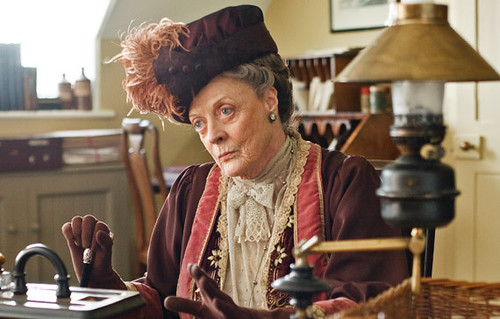
The most hilariously acerbic lines are spoken by Robert's mother Violet. Maggie Smith plays Violet with enough wit to keep her both obnoxious and endearing. Her rival is Matthew's forward thinking mother Isobel (Penelope Wilton), who is initially less reluctant than her son, snobbish in his own way, to become embroiled in the Earl's family.


Butler Mr. Carson (Jim Carter), a fierce defender of Downton's honor, and wise housekeeper Mrs. Hughes (Phyllis Logan) oversee the staff. New valet John Bates's (Brendan Coyle) limp causes a stir, but competent head maid Anna (Joanne Froggatt) is attracted to his kind demeanor. First footman Thomas (Rob James-Collier) dislikes him and seemingly everyone else except his mentor, the manipulative lady's maid Sarah O'Brien (Siobhan Finneran).

Gwen the maid (Rose Leslie) hopes to leave service, while the frequently flustered kitchen maid Daisy (Sophie McShera) dreams of pleasing the loud-voiced cook Mrs. Patmore (Lesley Nicol), and second footman William (Thomas Howes) pines for home.


Even the most conservative characters are torn between tradition and progress, and the most loathsome have moments of vulnerability and humor. The writing relies on psychological glimpses instead of heavy handed psychoanalysis and is aided by the expressive cast.

Downton Abbey is not politically correct. At times, unsavory characters bitterly espouse equality, and minorities are negative figures. We don't see backbreaking alternatives to service or closeups of the scullery maid's calluses. What Downton's lovely visuals lack in grit, the show compensates for in emotional texture. We witness the effects of bad company and resentment as well as good advice and loyalty.


This world is both familiar and exotic, making it a fascinating study in personality and culture. Its residents adjust to telephones and cars, but most of them have only a faint idea of impending social change and even less knowledge of the devastation at hand. As that cloud hangs on the horizon, characters are caught up in their own lives, and, for the time being, so are we. There is something intoxicating about getting lost in the intrigues of Downton Abbey.