Thursday, October 25, 2012

Shaun of the Dead


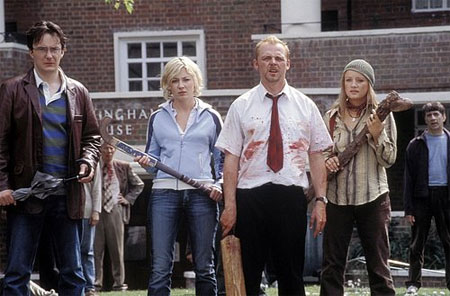
Edgar Wright's cult classic Shaun of the Dead follows the titular Shaun (Simon Pegg), a nice salesman who feels as though his life is going nowhere. His girlfriend Liz (Kate Ashfield) is disappointed in his lack of ambition. Shaun's best friend Ed (Nick Frost) epitomizes this arrested development. Ed's simian humor (he literally imitates gorillas) amuses Shaun to no end, but leaves their other roommate, Shaun's girlfriend, and her judgmental roommates Diane and Dylan (Lucy Davis and Dylan Moran) cold.

In the midst of his personal problems, Shaun finds himself in the middle of a zombie apocalypse. Is this his chance to find his inner strength and get his life together? That is, if he survives?

This comedy has amusing and surreal moments of silliness and satire, but its humor isn't for everyone. For those whose funny bone it doesn't strike, the film's strength comes from its metaphors. Shaun feels stuck in his routines, held back and a little dead inside--not unlike a zombie. In fact, the drones populating the city of London already resemble the living dead. Shaun is so oblivious to his fellow humans and the world around him, he hardly realizes an epidemic is upon them.


Our hero's journey from overlooked "loser" to courageous leader is also satisfying. He finds himself torn between the well-intended but prepubescent friend of his youth and his girlfriend's affections. This is as much a relationship film as it is a horror movie.

There are some bloody moments, though. Horror and horror-spoof fans will enjoy watching the nonplussed Shaun and his best mate battle zombies. Others might find the film diverting but not particularly memorable. Many might connect to a man in his thirties who is trying to find himself--zombie infestation or no.

Tuesday, October 23, 2012

Citizen Gangster


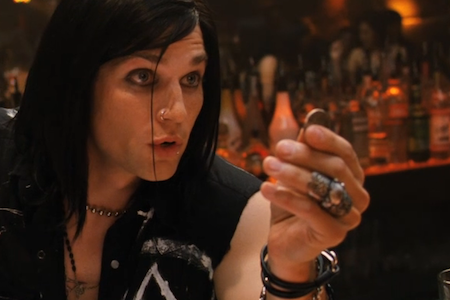
Citizen Gangster follows real-life figure Edwin Boyd (Scott Speedman) as he transitions from bus driver to theatrical bank robber. A World War II veteran, Edwin struggles to support his wife Doreen (Kelly Reilly) and two children, and dreams of being an actor. One day, he dons makeup and robs a bank at gunpoint. He realizes that, aided by his athletic abilities, this is easy money. Not to mention, he gains the thrill of attention he's always wanted.

In spite of his short-lived joy, the film's bleak colors convey Edwin's depressing, increasingly desperate situation. Unfortunately, the audience never quite connects the rather passive, mild mannered man to his wilder counterpart. The movie also depicts the robberies as more surreal, bemusing, and exciting than harmful, perhaps in order to convey how the media romanticized Boyd's crimes.

The story touches on Edwin's relationship with his father (Brian Cox), a retired policeman, but their complex history is not fully explored. Partway through the film, Kevin Durand brightens the screen as fellow bank robber and veteran Lenny Jackson. Unlike his mostly forgettable criminal friends, Lenny shows believable volatility and unexpected heart. Though not one to be messed with, he latches onto Edwin like a brother. The genuine bond between Edwin and Lenny is one of the most successful aspects of the film.

Their descent into living above the law is not glamorized. Boyd's relationship with his wife is increasingly strained, and the affect his actions have on his family is painful to watch. Still, though well made, the biopic Citizen Gangster never becomes more than the sum of its parts.

Saturday, October 6, 2012

The 24th Day


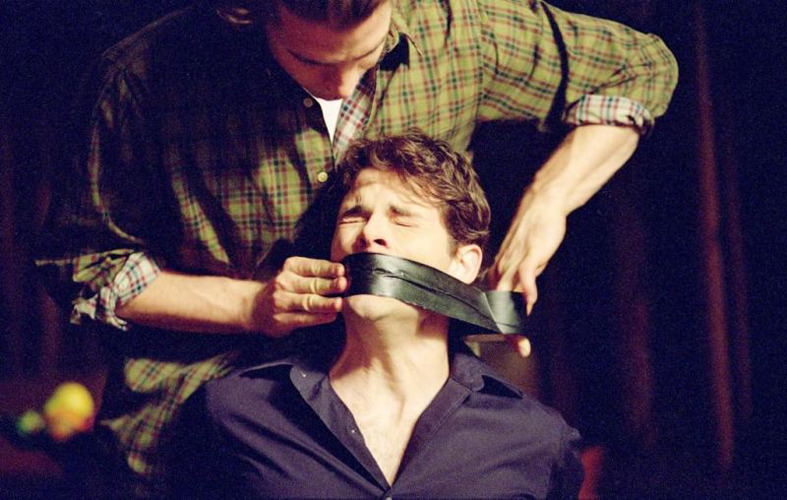
The 24th Day follows two men who meet at a bar. One follows the other home, ready for a night of fun, but the other has different ideas. James Marsden plays Dan, a confident movie executive. Scott Speedman is Tom, who is a cook. Directed by and based on a play by Tony Piccirillo, the script wavers between genuinely interesting and over-the-top, as the relationship between Dan and Tom is alternately believable and unrealistic.


The acting is not bad, but it is rather overshadowed by the soap-opera-level production values. Awkward editing, dramatic music, and cryptic flashbacks yank the viewer out of the genuinely tense apartment scenes. The most interesting aspect of the film is the interaction between Dan and Tom. Their characters bring up questions about class differences, honesty, guilt, and denial. And AIDS, and responsibility, and sexual orientation. Dan can be remarkably calm and sassy, while the sad Tom is so obviously unbalanced one wonders why Dan sticks around at first. While this is ultimately a rather poor movie, one has to admire it for trying.

Wednesday, October 3, 2012

The Moth Diaries


Based a novel by Rachel Klein, Mary Harron's The Moth Diaries never reaches its potential. The plot follows Rebecca (Sarah Bolger) to an all-girls boarding school. She feels that she is turning over a new leaf two years after the suicide of her father, a respected poet. Her bosom buddy Lucie (Sarah Gadon) considers herself boring, but Rebecca sees Lucie as the light at the end of her tunnel. Unfortunately, the enigmatic Ernessa (Lily Cole) arrives, driving a wedge between the two.


A lot is going on here. As their English teacher Mr. Davies (Scott Speedman) schools them on Dracula and homoerotic vampire stories, one can't help but remember that Lucy was Dracula's doomed victim. Is Ernessa metaphorically sucking the life out of Lucie? Is Ernessa literally a vampire? Or is this all in Rebecca's troubled mind? Why do Ernessa and Rebecca share so many similarities? Why does Ernessa tempt Rebecca with thoughts of suicide? Why is Mr. Davies, who admires Rebecca's late father, so interested in the sixteen-year-old Rebecca? Why is Rebecca afraid of sex--is it fear of adolescence, lesbianism, or something more sinister?


These are all intriguing questions, but none are resolved. Instead of lending an unsettling ambiguity to the story, this reduces the movie's emotional impact. Perhaps the biggest problem is the film's tone. Though there is some lovely imagery, the editing, music, and cinematography feel more like a generic teen flick than a haunting psychological thriller. The three main actresses have an ethereal beauty and do their best with what they have. Yet most of the cast lack gravitas. Then again, the fault may lie more with the movie's atmosphere than its actors.


Bolger is especially effective in her emotional scenes but doesn't hint at her potential insanity. Cole is the most effective of the girls as the elegant Ernessa. Her imposing height offsets her sweet, childlike face. She is the mysterious friend who plays the piano, speaks German, and writes poetry more beautifully than anyone else. Speedman is fine as Davies, but one wonders why the school's first male professor is young, attractive, and prone to discussing the power of female sexuality.


This was a great opportunity for a resonant and dark coming-of-age story. In spite of a few otherworldly moments, The Moth Diaries doesn't satisfyingly tie up any of its loose ends, leaving the viewer more confused than haunted.


Saturday, September 29, 2012

What's Your Number?


In spite of its mixed messages about female sexuality, What’s Your Number is surprisingly funny and even touching. Anna Farris plays Ally who hopes to find a date to her sister Daisy’s (Ari Graynor) wedding. After reading that most women who have twenty or more sexual partners never settle down, she is determined that her next lay be “the one.” To prevent raising the number of men she’s slept with, Ally enlists the help of her philandering neighbor Colin (Chris Evans) to track down her exes hoping they improved with time.

One of the film’s problems is its unintentional similarities to the superior Bridesmaids. The heroine has mixed feelings about a wedding, meets a man who encourages her to follow her artistic sensibilities, and struggles with unemployment. (“Struggles” is an overstatement; considering their financial situations, these characters have remarkable apartments.) Even the opening scene contains a gag that is nearly identical to one in Bridesmaids.

Still, the movie is more irreverent and amusing than most romantic comedies. Farris is hilarious as Ally, a young woman who makes many mistakes but never runs out of optimism. Evans is fairly appealing as Colin, the obligatory rogue with a heart of gold. Since he admits that he can hardly spend time with a woman without trying to sleep with her, she doesn’t consider him an option. Instead, she rendezvous with an assortment of ex-boyfriends and flings, played by a pleasing array of actors. A large part of the movie’s appeal consists of her awkward interactions with men played by familiar faces such as Joel McHale, Chris Pratt, Zachary Quinto, Martin Freeman, and Anthony Mackie.


The film also focuses on Ally’s relationship with her family. She feels out of place with her more conventional sister and perfectly coiffed mother, in spite of their close relationships. All this, of course, channels towards her inevitable lesson about love and being herself. Many women will identify with her grapples with relationship advice, the media, and questions about a “normal” modern woman’s sexual appetites. The movie touches on the thin line between giving someone a chance and trying to force a relationship.

Unfortunately, the movie undermines some of its more progressive themes. It certainly includes sexist stereotypes, not to mention weightism. Ally is meant to be a disaster, but she often looks perfect and is shot sexually. (To be fair, Colin is naked throughout most of the movie.) When it comes down to it, though Ally doesn’t fit into the film world, she is still a man’s ideal woman. She isn’t high maintenance, enjoys watching and playing sports (in one scene, she engages in a sexy one-on-one basketball game—in her underwear), and is up for almost anything.

There are definitely moments where the film crosses the line into poor taste. The whole thing is difficult to take seriously. The “comedic” music makes the movie feel as though it should have a laugh track. But What’s Your Number ultimately conveys the “life is messy: embrace it” message with (mostly) good-natured humor.


Friday, September 21, 2012

Wish You Were Here


Kieran Darcy-Smith's Wish You Were Here opens with a whirlwind tour of Cambodia. Four Australian tourists experience the local culture as they would an amusement park. Are they naive and entitled or just adventurous and free-spirited? Whatever the case, only three of them return home. Steph (Teresa Palmer) agonizes over the disappearance of her boyfriend Jeremy (Antony King). His absence hangs over Steph's sister Alice (Felicity Price) and her husband Dave (Joel Edgerton).


Alice must deal with this mystery as she teaches, cares for two children, and carries a third child inside. Price is generally excellent as the mostly contained Alice. She is the center of the film. King is likable if low-key as Jeremy, the mysterious businessman. Palmer's Steph is pretty but self-centered. Edgerton is painfully believable as the traumatized and increasingly erratic Dave. Tender moments with Dave and Alice's adorable and observant children as well as most character interactions are quite realistic.


Because of the story's non-chronological narrative, the plot feels a little thin. Too much depends on reveals, making many scenes more puzzling than intriguing. The audience sees characters react to events that are explained late in the film. This reduces the impact of the actors' work through much of the movie. The film also has several cliches about the "exotic third-world country." Dangerous natives, friendly children, and bright colors are all on display here. There is some subtle lampooning of these travelers, who are as dutifully somber visiting a memorial as they are gleeful when buying overpriced trinkets.


The camera attempts to convey a sense of realism while capturing a peaceful beauty that contrasts with the characters' internal lives. The soundtrack is lively and fitting, especially the haunting closing song "Bend With Me." Though Wish You Were here is a credible and sometimes harrowing psychological study, it leaves the viewer wanting something more.

Monday, September 17, 2012

Metropolitan follows the self-absorbed and well-intended

Allison Parisi as Jane and Edward Clements as Tom


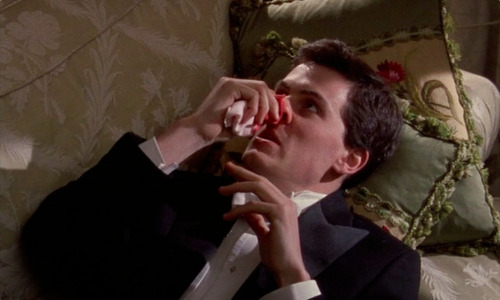
Whit Stillman’s singular wit is on fine display in Metropolitan, his first and perhaps most famous film. Some viewers might not want to follow upper crust (or “UC,” as one character says) New Yorkers who dine, dance, and complain about their privilege. Others will delight in their alternately ridiculous and thought-provoking dialogue.

One Christmas vacation, Tom Townsend (Edward Clements) stumbles into a crowd of socialites. He knows several of them, but his situation is decidedly middle class. Tom claims he doesn’t approve of their decadent balls, yet night after night he partakes in their soirees and late night discussions


These youths are prone to hyperbole and contradiction. One calls Tom “the phony of the decade,” while another calls a peer “one of the worst guys of modern times.” They don’t think twice about dismissing Charles Fourier’s utopian socialism. Initially obnoxious, their pretension becomes increasingly amusing and even poignant as they try to justify their existence. The awkward Charlie Black (Taylor Nichols) breathlessly goes on about how their class is doomed. They have nowhere to go but down. What else are they to do but enjoy themselves and philosophize?

Along with the conflicted Tom and confusing Charlie, this group includes Cynthia McLean (Isabel Gillies), the “slut,” Audrey Rouget (Carolyn Farina), the book lover, and the often passed-out Fred Nuff (Bryan Leder. They usually gather at homes of the sophisticated Sally Fowler (Dylan Hundley) or imperious Jane Clark (Allison Parisi).


The most memorable individual is Nick Smith, played by Christopher Eigeman. Like an Oscar Wilde character but with more conviction, Nick revels in defending the status quo and has an opinion on everything. Hypocritical, wise, passionate, dishonest—Tom says, “he’s basically a nice guy, I think.” Others believe Nick “could be really crazy.” He vilifies the titled Rick Von Sloneker (Will Kempe), his apparent nemesis. Is this slander, or is Nick just more observant than the others? Nick might drive his friends crazy, but in a moment of crisis (real or imagined), they note that Nick “would know what to do.”

There are moments of pathos. Several characters harbor painful crushes, and both Nick and Tom come from “broken homes.” Nick uses humor to describe his step-mother’s malice, while Tom is in denial of his father’s indifference.

Christopher Eigeman as Nick

The cinematography is simple, and the music is appropriately whimsical. Because there is no plot, Stillman’s films can feel interminable. Eigeman is always spot on, but some of the young actors, most of them appearing in film for the first time, are rather wooden and awkward.

Still, this window into the lives of the self-absorbed and youthful rich contains great humor. While their manner of speaking may be unrecognizable to most audiences, these people are surprising in a way fictional characters rarely are. Only comparable to other Stillman personalities, Nick is a unique figure in cinema, as is Whit Stillman himself.